Sprinkle Celebration Cake


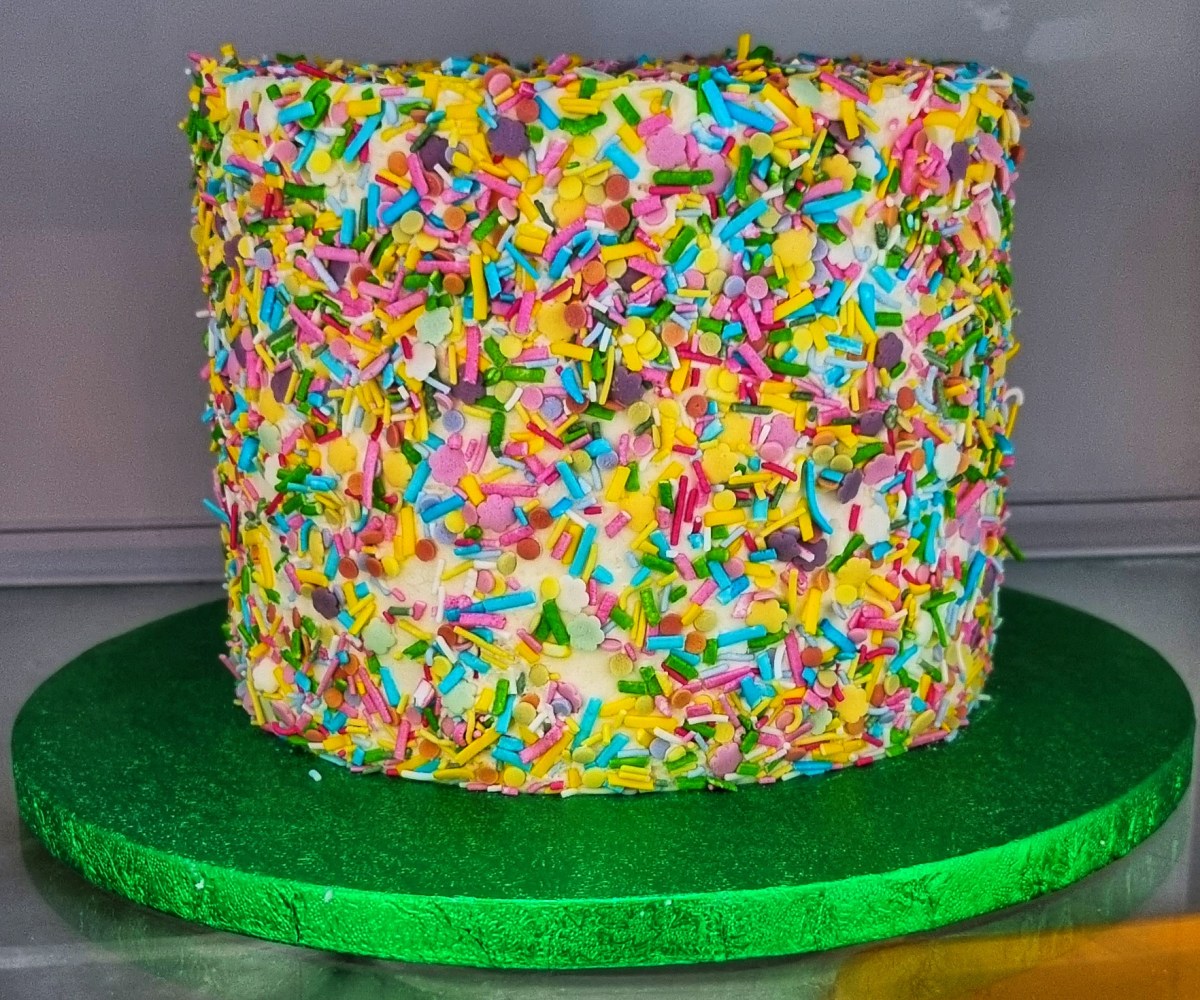
This fun celebration cake is adapted from my Victoria sponge recipe with the addition of festive sprinkles throughout the cake.

As with any Victoria sponge recipe, the proportions of ingredients are based on the weight of the eggs (without their shells), so you can use whichever size eggs you prefer.

Makes one 4-layer 6” (15cm) cake. All ingredients, except the double cream, should be room temperature

Ingredients

Cake – single layer so you need 4x for the full cake

  • 2 eggs
  • 2 eggs weight of golden caster sugar
  • 2 eggs weight of margarine, plus extra for greasing
  • 2 eggs weight of self raising flour
  • 20g bake stable sprinkles (I use these sprinkles)
  • 1 tsp vanilla extract
  • 1 tbsp Elmlea plant based double cream

Buttercream (x2 – one portion for filling and crumb coat, then same again for the final decoration)

  • 80g margarine
  • 80g solid cooking oil (I use Trex, but other solid oil can be used)
  • 330g icing sugar
  • 2 tsp vanilla extract
  • 1 tsp lemon juice

Assembly/Decorating Stuffs

  • Sprinkles
  • Strawberry jam

Cake Process

  1. Preheat the oven at 170C fan assisted and prepare a 6″ (15cm) sandwich tin with margarine, baking paper on the bottom, and dust with flour
  2. Beat the sugar and margarine together at a medium speed until light and fluffy
  3. Using a spatula, scrape down any mixture from the sides of the bowl. Beat in the eggs individually at medium speed. Add the vanilla extract
  4. Scrape down any mixture from the sides again. Sieve the flour into the mixture, add the bake stable sprinkles, and fold in
    • If the batter is feeling a bit thick add the double cream
  5. Pour into the prepared tin and put in the oven for 30-35 minutes, or until a skewer comes out clean and the top of the cake is springy. Put on a cooling rack in the tin for 30 minutes, then take out of the tin and continue to cool on the rack
  6. Repeat steps 2-5 until all four cakes are baked and cooled. Once cooled, level each cake

Now to make the buttercream for the crumb coat! Just follow the process for my Vanilla Buttercream Icing.

And now we decorate.

  1. Grab your cake drum/board and put a small dollop in the centre. Place your first cake layer centre on the board
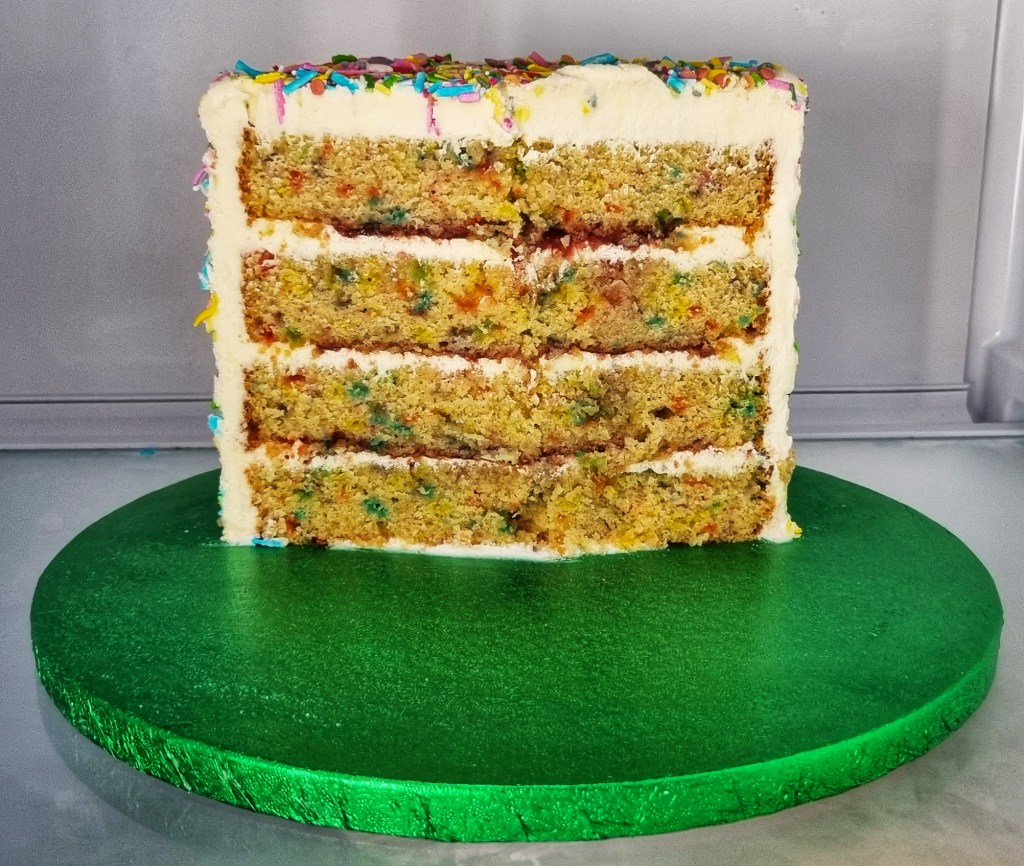
  2. Cover the top of the layer with a thick layer of buttercream and smooth it out with an offset spatula. Make a small well in the middle and scoop in 1-2 tsp of the jam. Place the next cake layer on top and repeat until the last cake layer is on
    • I found that I had to put some bamboo dowels in to keep the cake from slipping with all the weight of the four layers
  3. Cover the top and sides with buttercream and smooth with a side scraper
  4. Pop in the fridge for at least 2 hours, better if overnight, until the buttercream has hardened
  5. Make some more buttercream using the same amount of ingredients and with the same process
  6. Cover the top and sides again with this extra buttercream and make sure it’s nice and thick. Smooth with a side scraper
  7. Pop in the fridge again until this layer of buttercream has hardened
  8. Push your sprinkles of choice into the buttercream. I found it easier to wear a vinyl food safe glove while doing this

Ta da! Enjoy!
Bee Hive Cake

I decorated this 3 layer lemon and honey cake (recipe here) with lemon Swiss meringue buttercream (recipe here) and fondant bees.

I started by covering the cake drum in green fondant. I lightly wet the drum using a pastry brush dipped in water, then draped the green fondant (which had been rolled out to around 2mm) over the top. I smoothed the fondant with a smoothing tool. Using a sharp knife, I trimmed the edges of the fondant so that it was in line with the edge of the cake drum. I then stuck the green ribbon around the edge using double sided tape. For a bit of extra fun, I stuck little bees around the edge.

Next I made the bees. I rolled small amounts of yellow fondant into cylinders. Then I rolled out black fondant to about 1mm thick and cut out strips. I used a small amount of water to stick the strips to the yellow fondant; a fine paintbrush is the easiest way to apply the water. I used a cocktail stick dipped in black food colouring to make the eyes, and an icing tool shaped as a D dipped in black food colouring to make the smile. I pushed in almond flakes for the wings, then pushed cocktail sticks in so it looks like the bees are flying.

Finally, I made the little hive door with black fondant by cutting an arch out of paper then using that as a stencil.

I completed the fondant parts in advance so that the fondant dried and hardened in time.

I made the lemon and honey cake recipe twice. The second batch I made as a 2 egg version and poured it into a 6″ (15cm) heatproof bowl which I had greased with margarine. I popped this in the oven for 20 minutes at 155C, then dropped it down to 140C and checked every 5 minutes until the top sprung back when touched.

I made a full batch of Swiss meringue buttercream, adding 3 tsp of lemon extract to get the lemon flavour I wanted.

Then I started assembling the cake. I cut the tops off the round layers to make them flat. I used a 6″ (15cm) cake board and put a blob of buttercream in the centre to keep the cake in place. Then I put the first layer on and covered the top in buttercream. I repeated this with all three layers, then gave the cake a crumb coat.

I popped this in the fridge for a few hours so that the buttercream firmed up. While the cake was firming up, I added yellow colouring to the remaining buttercream to give it a golden colour.

Once the cake had finished firming up in the fridge, I started getting things ready for decorating. I put a large round piping tip into a piping bag and transferred the golden lemon buttercream into it. Starting from the bottom, I piped rings around the cake. I used a smaller piping tip to fill in any holes I saw. Once finished, I popped the cake back in the fridge.

Once the buttercream had firmed up, I moved the cake carefully onto the covered cake drum. I then placed the little door and put the bees in position.

Enjoy!

Swiss Meringue ‘Buttercream’

This type of buttercream is very smooth because the sugar is melted before it’s incorporated with the fat. This also prevents the sugar recrystallising like it can in regular buttercream, ensuring your buttercream stays perfectly grain-free.

This recipe will crumb coat and cover a 4 layer 6″ (15cm) cake, or decorate 28 cupcakes.

Ingredients

  • 8 egg whites (approximately 330g)
    • These can be separated, but I prefer to use the egg whites you can buy in the carton in the fridge section of the supermarket because I don’t know what I’d do with so many egg yolks!
  • 330g caster sugar
  • 250g margarine/dairy-free spread
  • 250g vegetable shortening
  • 2-3 tsp of flavouring

Process

  1. Put the vegetable shortening and margarine in the bowls of a stand mixer with paddle attachment and beat for 5-8 minutes, until fully combined, soft, and pale. Put to one side
  2. Put the egg whites and caster sugar in a heatproof bowl over simmering water and whisk until the sugar is completely dissolved and the mixture is warm to the touch, then remove from the heat. Don’t allow it to cook or you’ll end up with a sweet scrambled egg.
  3. In a stand mixer with the whisk attachment, or an electric hand whisk, whisk on high speed until stiff and glossy peaks form
    • This will take 10-15 minutes
  4. Add the margarine/vegetable shortening mixture to the egg white/sugar mixture in batches, whisking until incorporated after each addition
  5. Add the flavouring and whisk until fluffy

Enjoy!

Tips

If your buttercream doesn’t taste of the flavouring enough, add more 1 tsp at a time and beat for 2 minutes each time until desired flavour is reached.

If the buttercream looks wet, almost like it is sweating, just pop it in the fridge for a couple of hours then beat on full speed with the paddle attachment for a few minutes. The end result should be smooth, glossy looking buttercream.

Lemon and Honey Cake

Using honey instead of sugar makes this cake quite rich and moist, and the classic pairing of honey and lemon will have your tastebuds buzzing.

This recipe makes two 6″ (15cm) cake layers.

Ingredients

  • 150g honey
  • 175g margarine, plus extra for greasing
  • 3 large eggs
  • 175g self raising flour
  • 1/2 tsp bicarbonate of soda
  • Zest of 1 lemon
  • 1 tsp lemon juice
  • 1 tsp plant based milk

Process

  1. Preheat the oven to 155°C fan assisted and put a shelf in the middle. Grease and line the bottom of two 6″ (15cm) cake tins to ensure your cake doesn’t stick
    • Lightly grease the inside with margarine. Cut a circle of non-stick baking parchment the size of the tin and use it to line the bottom – the margarine on the bottom of the tin will keep the parchment in place. Dust the side with some flour, making sure to knock off the excess
  2. Put the honey and margarine in a bowl together and beat them until light and creamy (at a medium speed if using a stand mixer)
  3. Add the eggs one at a time, making sure they are fully incorporated before adding the next one
  4. Add the lemon zest and juice, and mix until combined
  5. Sift in the flour and bicarbonate of soda, and fold until combined. If the mixture feels stiff, add the plant based milk to slacken it slightly
    • This is still a very thick mixture that shouldn’t be runny, but you should also be able to stir it without difficulty
  6. Pour the mixture evenly between the two prepared cake tins and level off with an offset spatula or butter knife
    • I tend to weigh the tins to make sure the quantities are even
  7. Bake for 25 minutes, at which point the tops should spring back to the touch. You can’t trust a skewer with this cake, and this recipe gets dark really quickly because of the honey
  8. Allow the cakes to cool for 15-20 minutes in the tin before removing onto a wire rack. Allow the cakes to cool completely on the wire rack before storing or decorating

I coated this cake with just a crumb coat of lemon buttercream (recipe here, I swapped out the vanilla extract for lemon extract), but you can decorate it how you wish.

Enjoy!

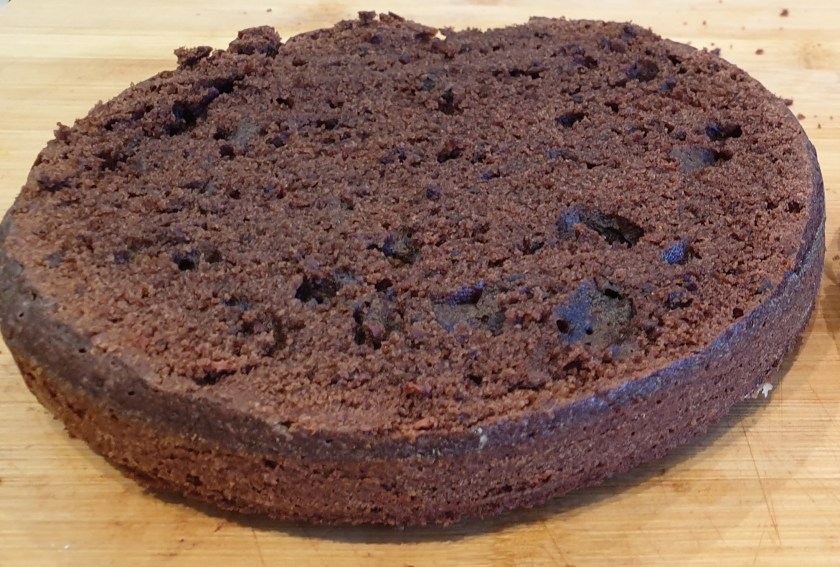
As you can see, the cake gets really dark once baked

Amazon Associate Links

Most of the baking equipment I used can be found on Amazon, find them here

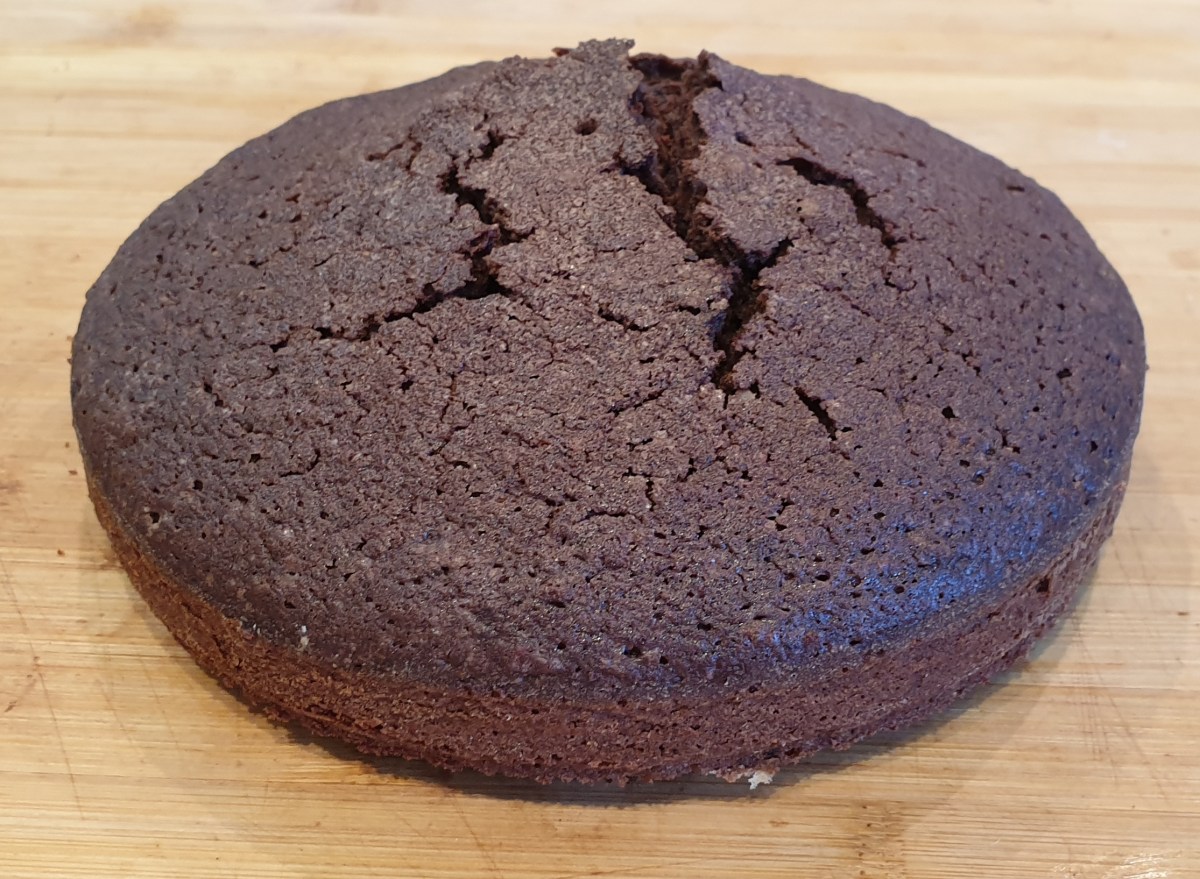
Chocolate Sponge Cake

This recipe will make a single 6″ (15cm) sponge cake. All ingredients, except the double cream, should be room temperature.

Ingredients

  • Margarine for greasing the cake tin
  • 100g self-raising flour
  • 105g caster sugar
  • 20g 100% cocoa powder – NOT hot chocolate powder!
  • 30g cocoa nibs
    • Make sure these are small; you may have to put them in a food processor to bring the size down (but don’t powder them)
  • 35g cooled espresso
    • I make this in a Moka pot and let it sit until room temperature, otherwise make a cup of black coffee and pour in about 60ml when cool
  • 65g plant-based Elmlea double cream (or another dairy alternative to double cream)
  • 60g sunflower oil
  • 1 large egg

Process

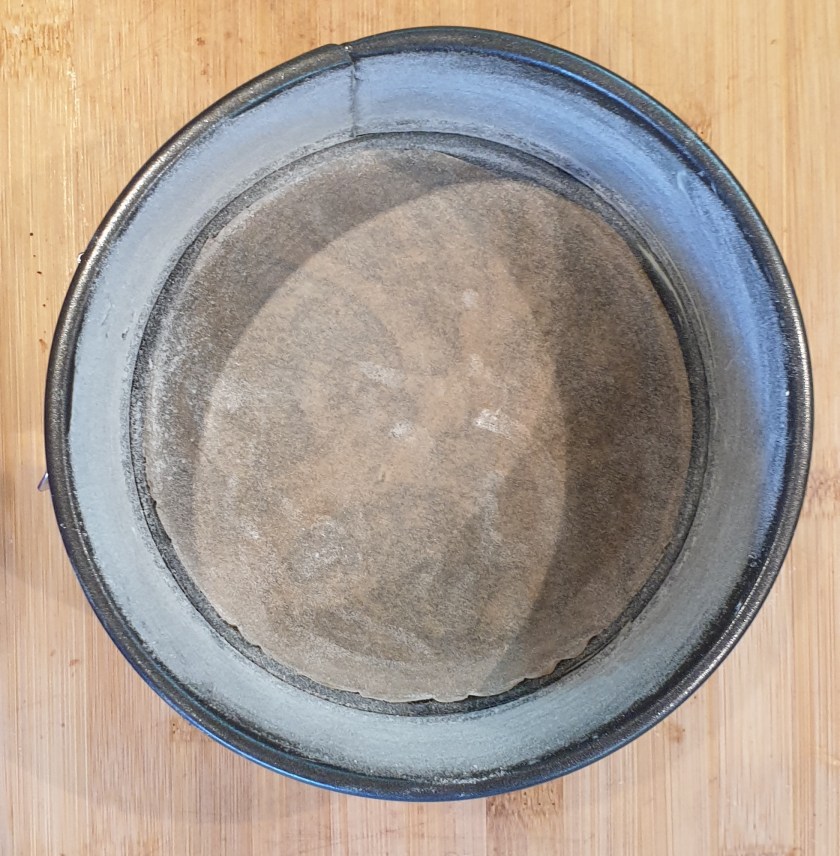
  1. Prepare a 6″ (15cm) cake tin (I prefer to use a springform tin) to ensure your cake doesn’t stick
    • Lightly grease the inside with margarine. Cut a circle of non-stick baking parchment the size of the base of the tin and use it to line the bottom – the margarine on the bottom of the tin will keep the parchment in place. Dust the sides with some flour, making sure to knock off the excess
  2. Set oven to 160C fan assisted and put a shelf in the middle
  3. Sieve all dry ingredients into a bowl and whisk them to combine
  4. In a separate bowl whisk wet ingredients
  5. Add mixed dry ingredients to wet and mix until combined
  6. Pour into tin and cook for 40-45 minutes, until a skewer comes out clean
  7. Allow cake to cool for 30+ minutes in the tin before removing from tin

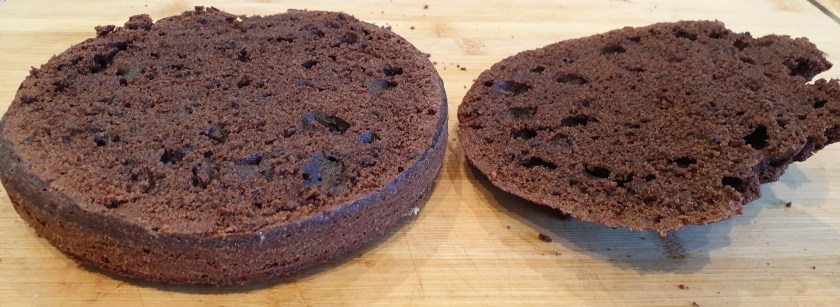
If you’re not using the cake on the day it is made, wrap it in clingfilm once it is out of the tin and put in the fridge. Double wrap in clingfilm if it is going in the freezer to make sure it doesn’t get freezer burn. Allow the cake to return to room temperature completely before decorating.

I always cut the top off the cake using a cake leveller before wrapping in clingfilm so that it is ready to decorate immediately.

Enjoy!

Amazon Associate Links

Most of the baking equipment I used can be found on Amazon, find them here

Double Chocolate Chip Cookies

As a self-proclaimed cookie monster, it’s often difficult for me to find really tasty dairy-free cookies.  Frequently, dairy-free desserts are also gluten-free, and this can make cookies really crumbly and dry.  My cookies are crisp on the outside and deliciously chewy-gooey in the middle.

This recipe will make around 12 big cookies or 24 small cookies. All ingredients, except the margarine, should be at room temperature.

Ingredients

  • 250g chocolate chips (or chopped up chocolate bar)
  • 230g cold margarine, cubed
  • 160g golden caster sugar
  • 160g light brown muscovado sugar
  • 70g cocoa powder – NOT hot chocolate powder
  • 200g self raising flour
  • 200g plain flour
  • 5g baking powder
  • 2 large eggs, beaten

Why both self raising and plain flour you might ask? Well, just self raising flour would cause the cookies to rise too much, whereas just plain flour wouldn’t have enough rise.

Why both golden caster sugar and light brown muscovado sugar? The muscovado sugar adds an almost caramel-like flavour to the cookies and makes the cookies more gooey, but by itself would make it too sweet and caramel-y.

Dairy Free Swaps

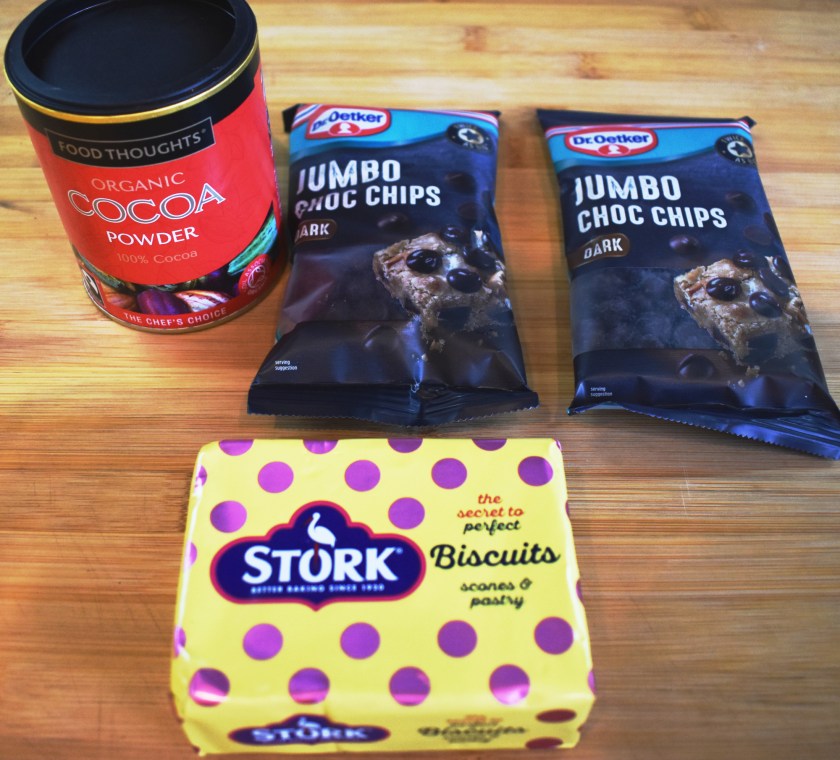
Dairy free ingredients

The chocolate powder, chocolate chips, and margarine are the ingredients that usually contain dairy. I’m so glad I found the Dr Oetker Jumbo Choc Chips; I can be really lazy and chopping up chocolate can be tedious. It does state on the back ‘May contain traces of dairy’, but this is something that my intolerance allows. If you do have an allergy, PLEASE use a chocolate that you know will not cause a reaction.

Process

  1. Beat the margarine, using a stand mixer or hand mixer, using a high speed until lighter in colour
  2. Add the sugars to the beaten margarine
  3. Push down the mixture from the edges. Add half of the flours and all of the baking powder and cocoa powder
  4. Add the beaten eggs and mix until combined
  5. Slowly add the rest of the flours in equal amounts until dough is tacky and doesn’t stick to your fingers if you touch it. You might not use all of the leftover flour
  6. Add the chocolate chips and mix with a stiff spatula or wooden spoon. You could damage your mixer if you use it to mix in the chocolate chips.
  7. On a flat surface, rip off a piece of clingfilm which is about 10cm wider than your freezer drawer/shelf. Turn out the cookie dough on to the clingfilm and form into a sausage along the length of the clingfilm. Make sure to not make it wider than your freezer drawer/shelf. If making smaller cookies, split the dough in half and make 2 cookie dough sausages.
  8. Pop the cookie dough sausage(s) in the freezer for 2 hours to 1 day
  9. Turn the oven on at 175C (fan assisted)
  10. Line a baking tray with non-stick baking paper. I use a silicone baking mat
  11. Using a sharp knife, cut the cookie dough sausage into cookies! They should be about 1.5cm thick.
  12. Pop in the preheated oven for about 17 minutes
  13. Wait about 15 minutes to cool on the tray then move over to a cooling rack

Enjoy!

P.S. want a less gooey cookie? Turn the temperature down to 150C (fan assisted) and bake for 25 minutes. This should make a more biscuit-like cookie.

Amazon Associate Links

Most of the baking equipment I used can be found on Amazon, find them here